Every store has one simple goal—customers should feel comfortable while shopping and the products should be easy to find.
But this comfort depends heavily on how the store layout is planned.
Different businesses follow different layouts because every customer behaves differently. A supermarket shopper moves fast and wants clear aisles while a boutique shopper prefers a relaxed and creative environment.
Understanding these layouts helps you plan your store better and get more sales without increasing your space.
Below are the four most commonly used store layouts and how they impact customer movement.
1. Grid Layout – Structured and Space-Efficient
The grid layout is the most familiar store design. It has straight parallel aisles with products displayed on both sides you will see this layout mostly in supermarkets grocery stores pharmacies and general stores.
Why stores choose this layout
- Easy for customers to walk in a straight line.
- Helps display maximum products in minimum space
- Navigation becomes simple and predictable.
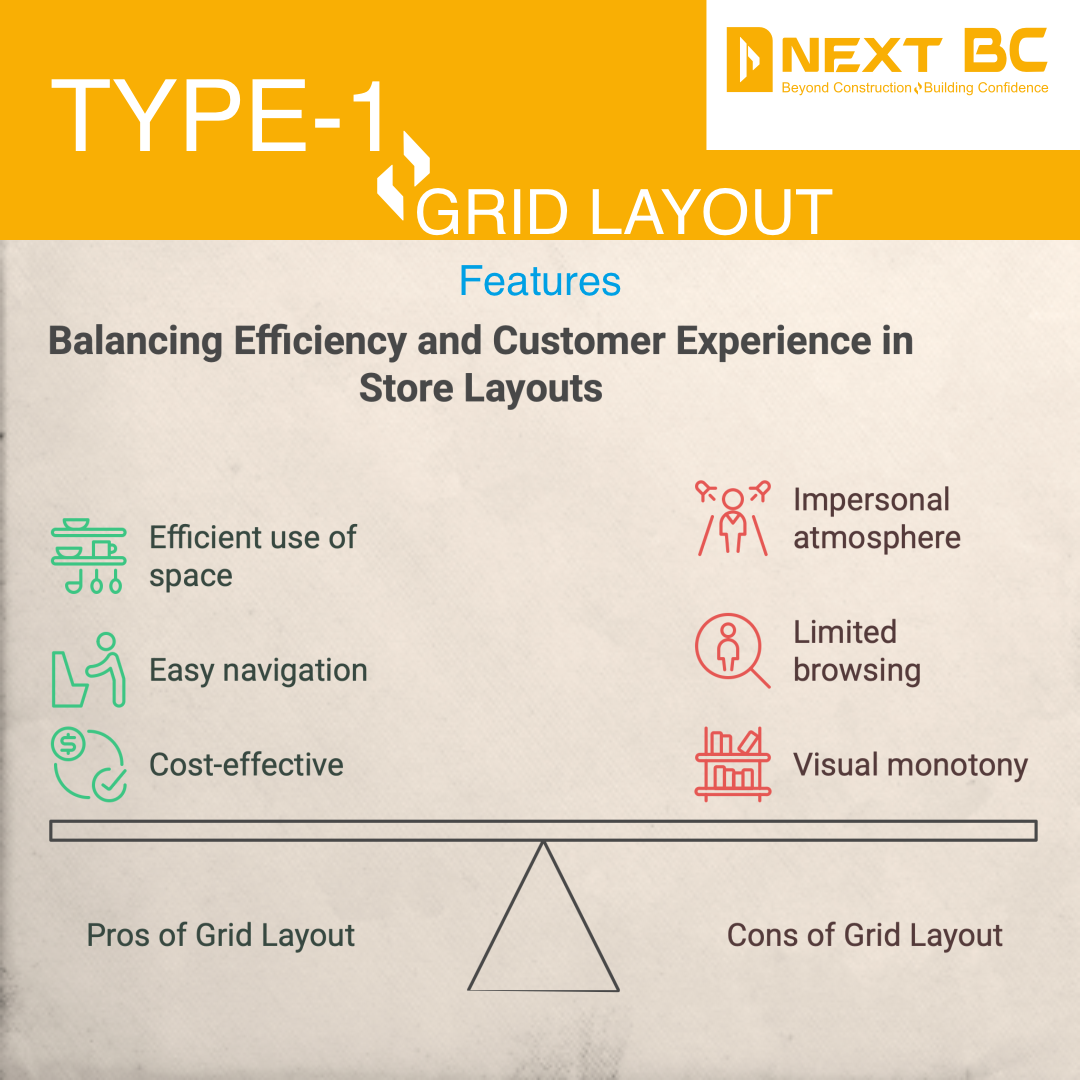
Pros:
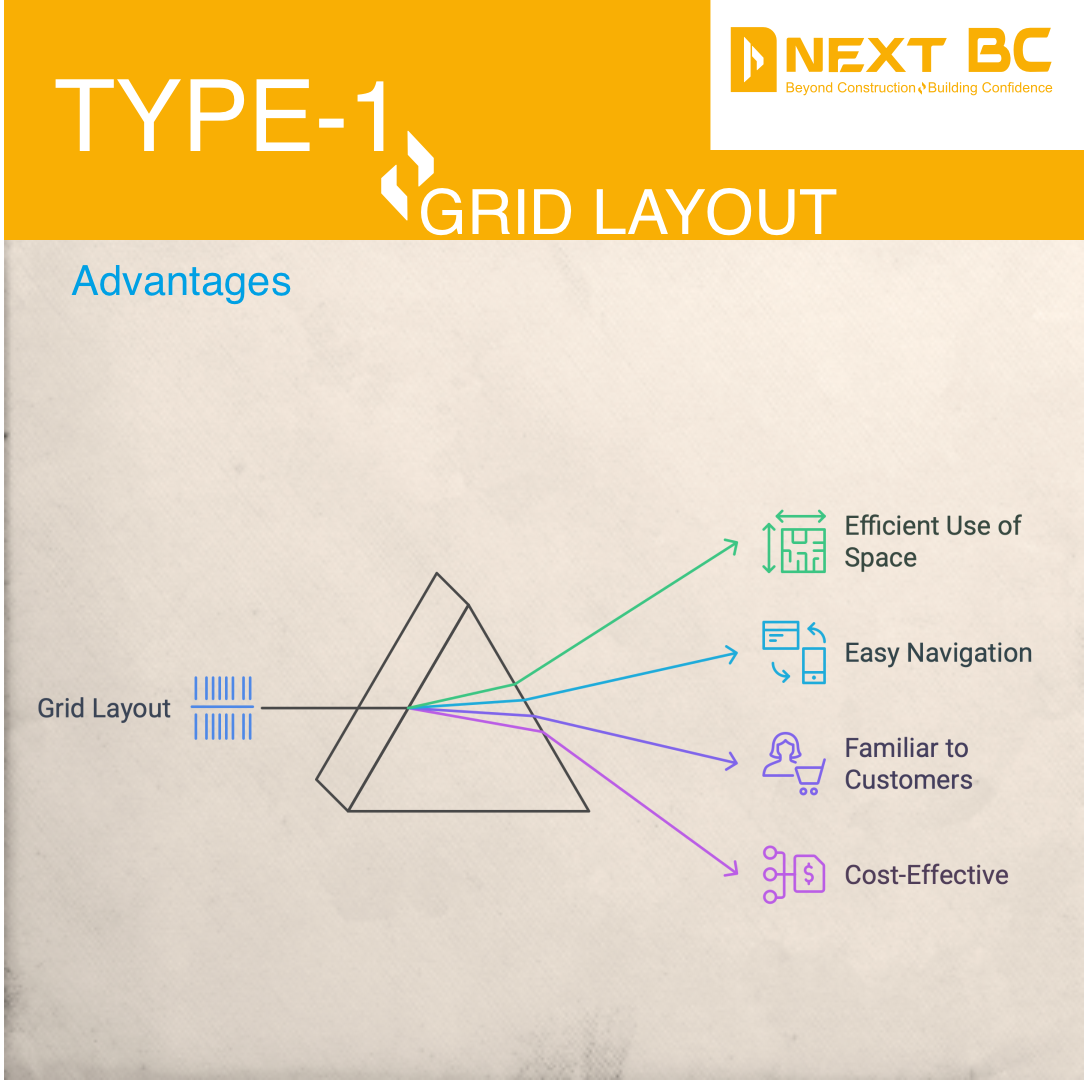
- ✔ Best use of floor area.
- ✔ Customer movement is quick.
- ✔ Easy for shoppers to locate regular daily-use products.
Cons:
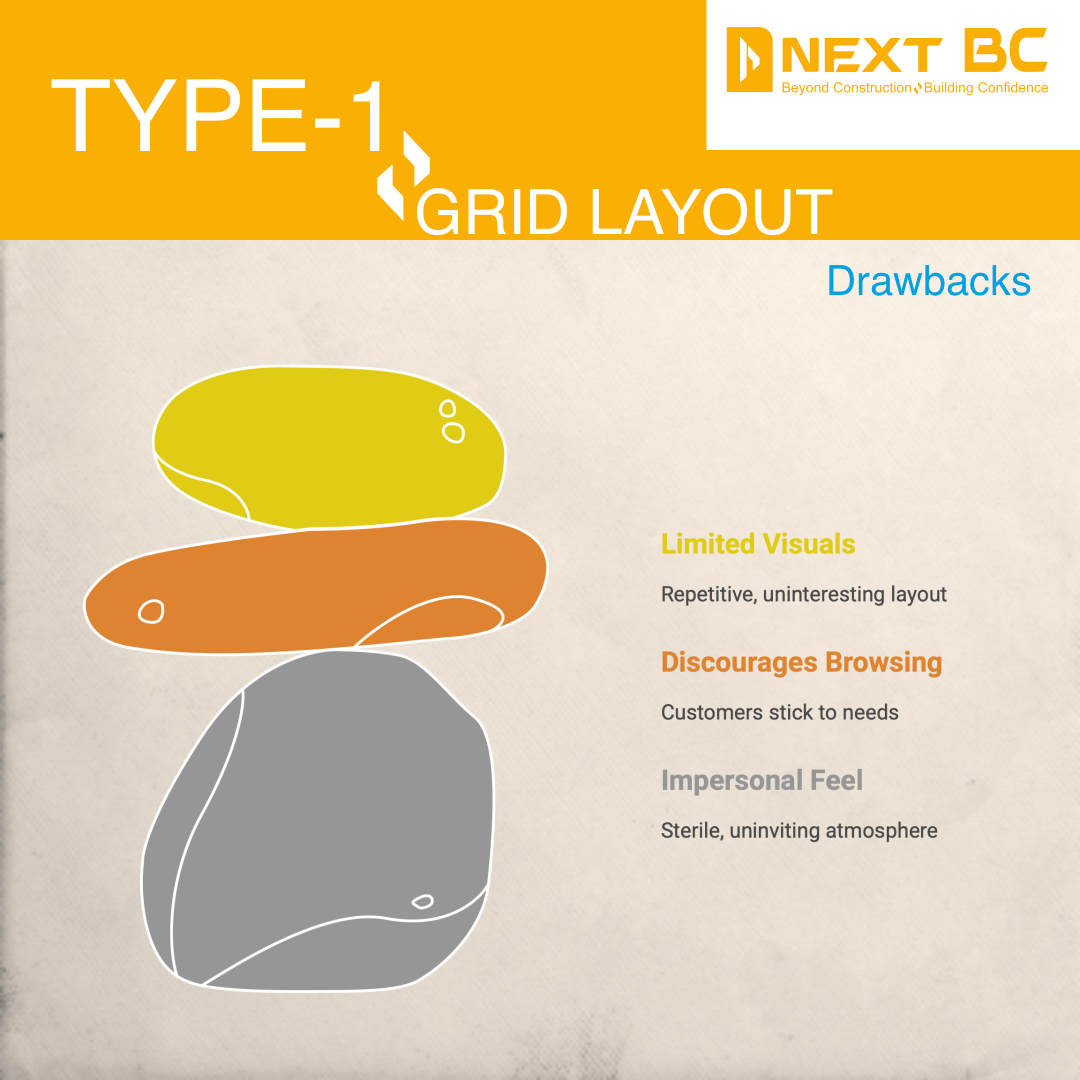
- ✘ It looks the same everywhere, so it can feel dull.
- ✘ Customers may not stop to browse.
- ✘ Not suitable for premium or creative retail.
2. Loop Layout (Racetrack Layout) – Guided Customer Journey
The Loop Layout creates a planned path for the customer to walk through the path moves around the store like a loop ensuring that shoppers pass many sections and discover more products.
This layout is popular in department stores lifestyle stores and furniture outlets.
Why do stores like this layout?
- Customers automatically see more groups.
- Helps with setting up themed displays and telling stories
- Makes people want to look around and buy right away
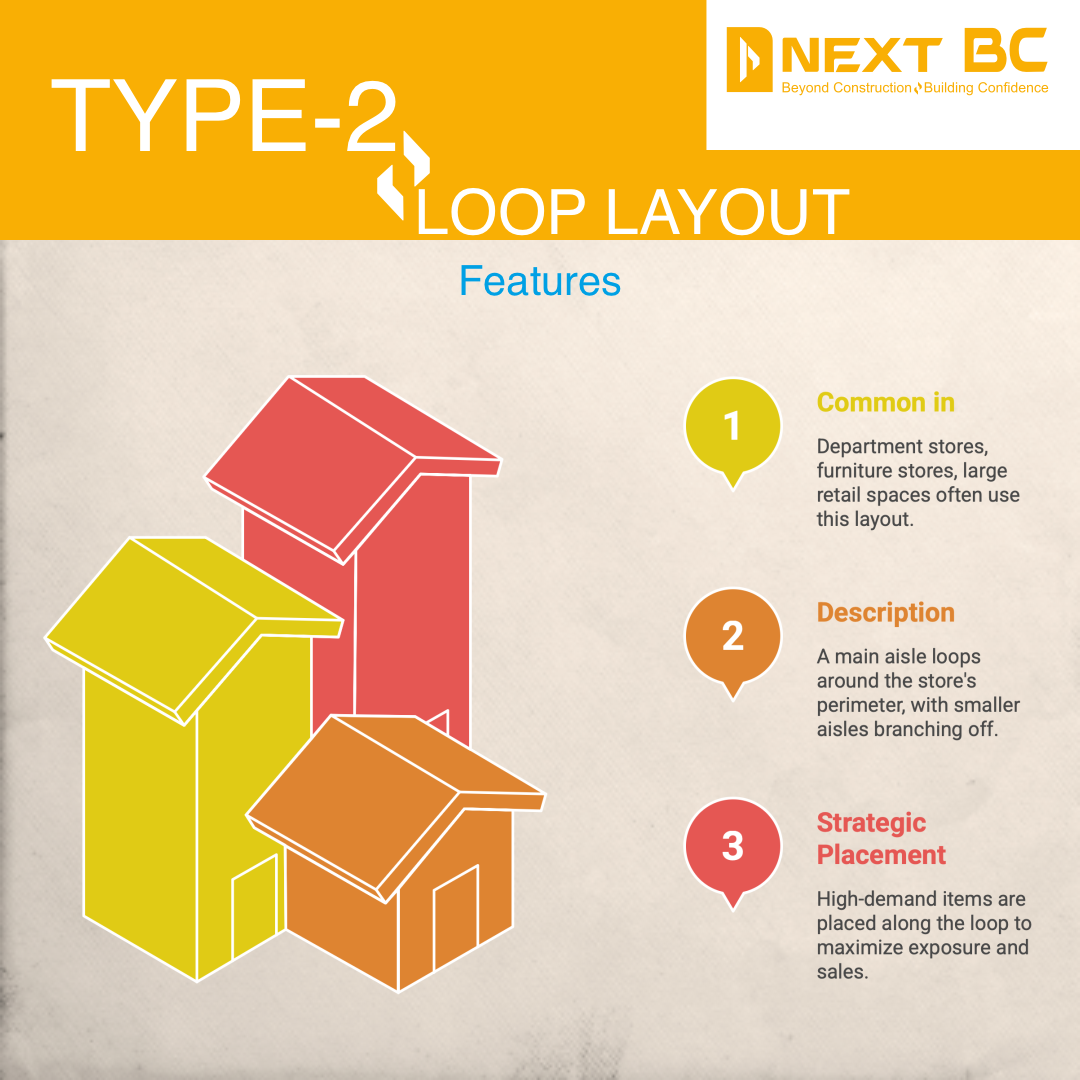
Pros:
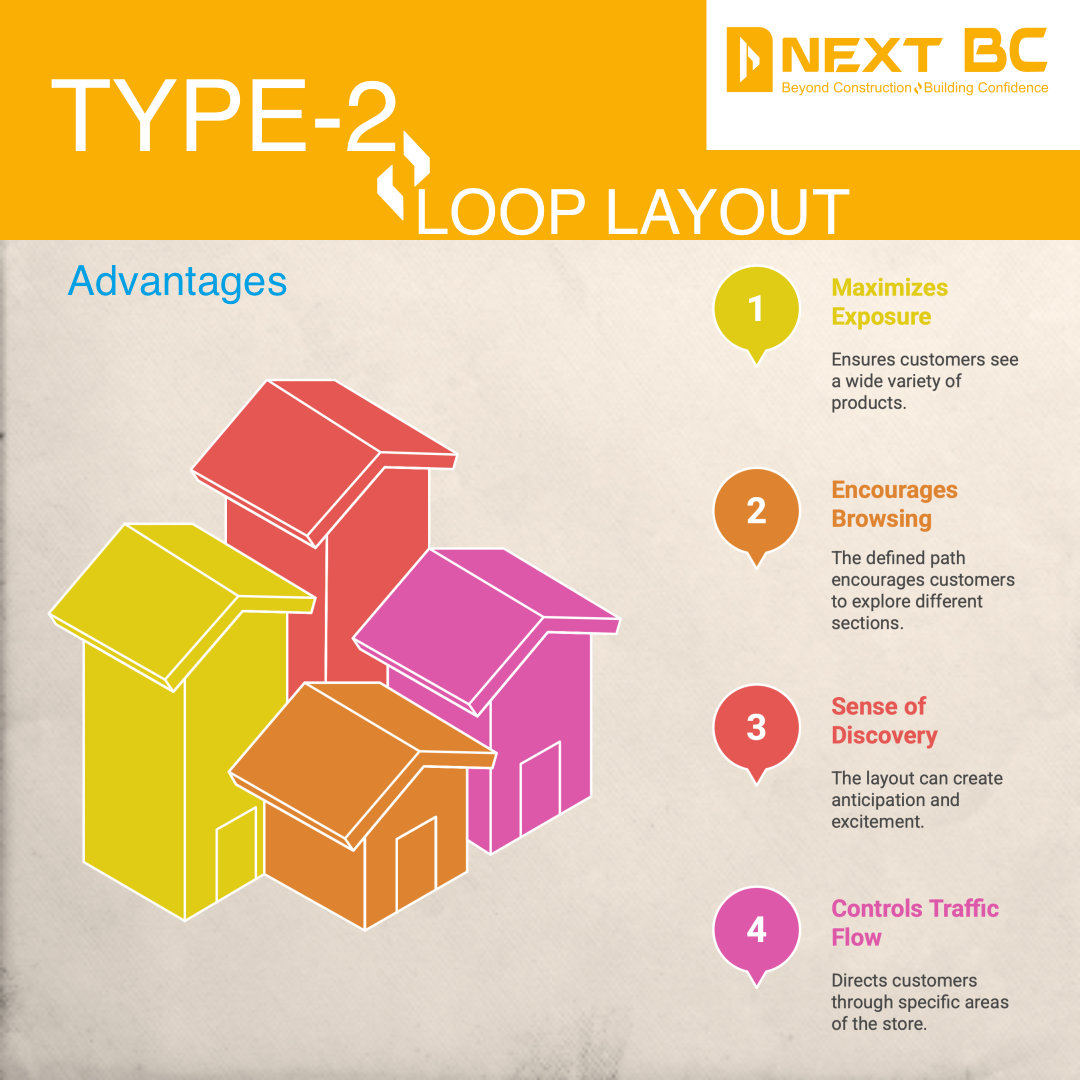
- ✔ Gives customers the most exposure to products
- ✔ Makes shopping more fun
- ✔ Gets customers to stay in the store longer
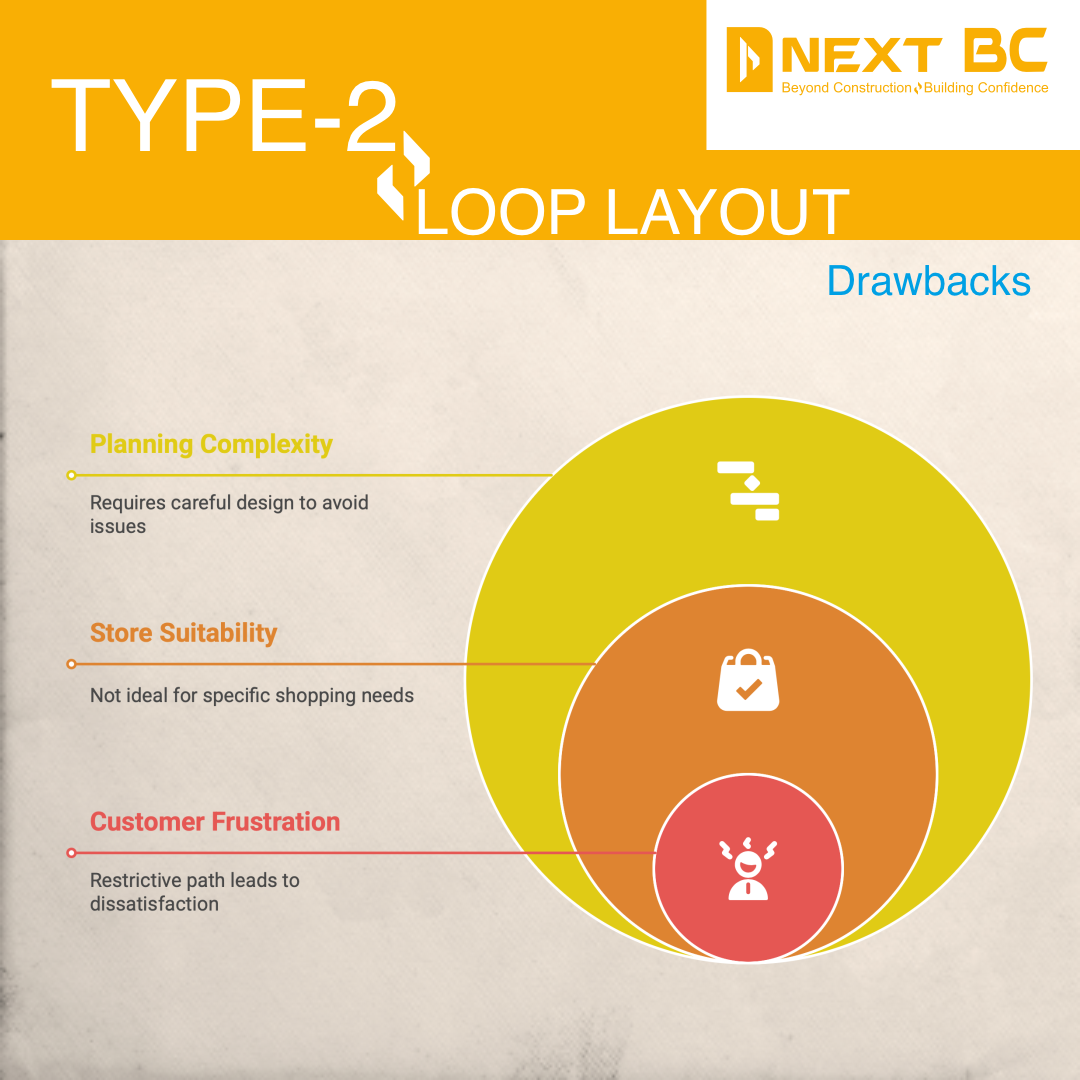
Cons:
- ✘ If the loop is too narrow, it feels like it is limiting. Not good for stores where customers want to get in and out quickly
3. Free-Flow Layout: Open, Creative, and Laid-Back
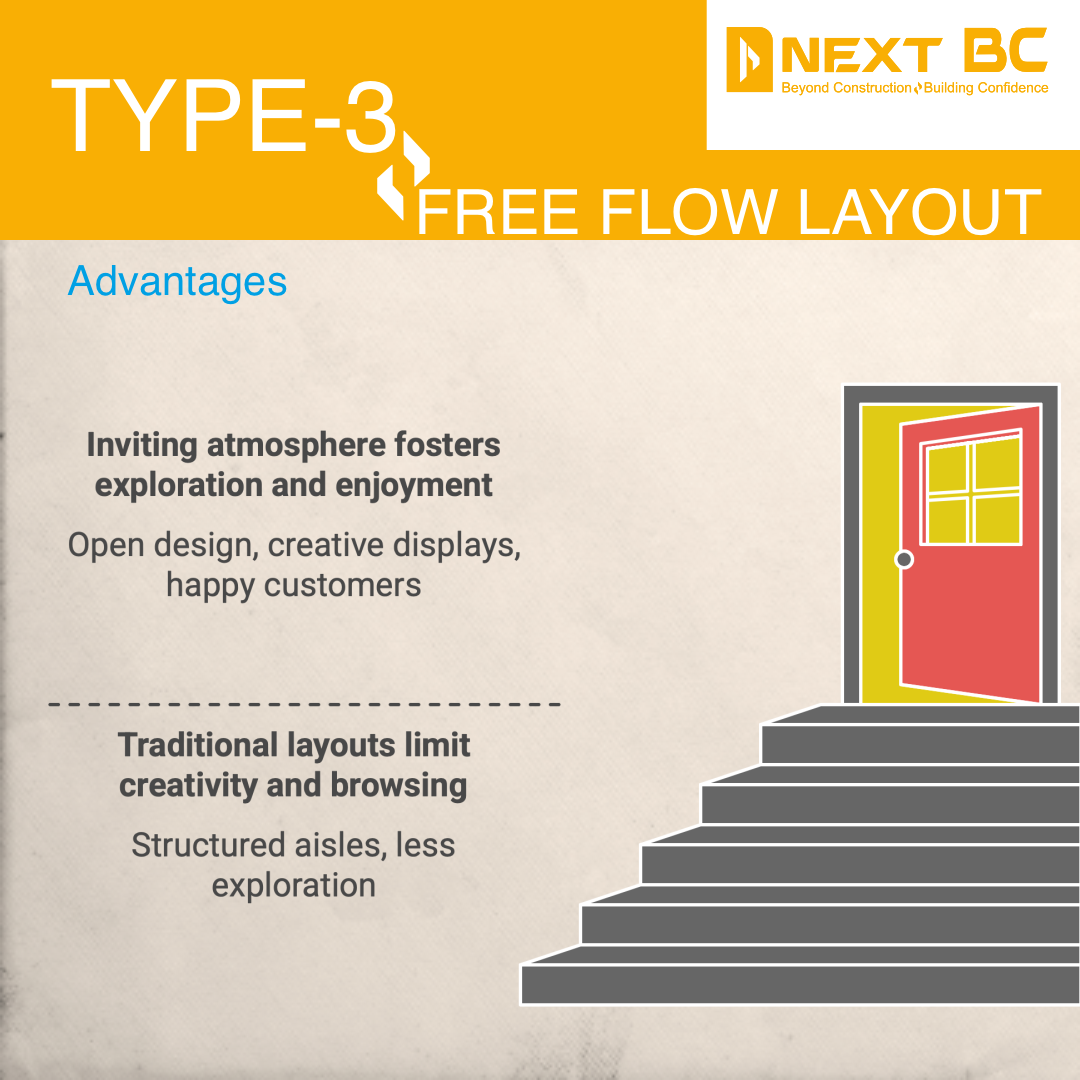
The Free-Flow Layout does away with fixed aisles. It lets you show off products in open groups or stylish vignettes.
This layout is ideal for boutiques, designer stores, cosmetics shops, lifestyle brands, and specialty retail.
Why designers love this layout
- It supports creativity.
- The store looks high-end and welcoming.
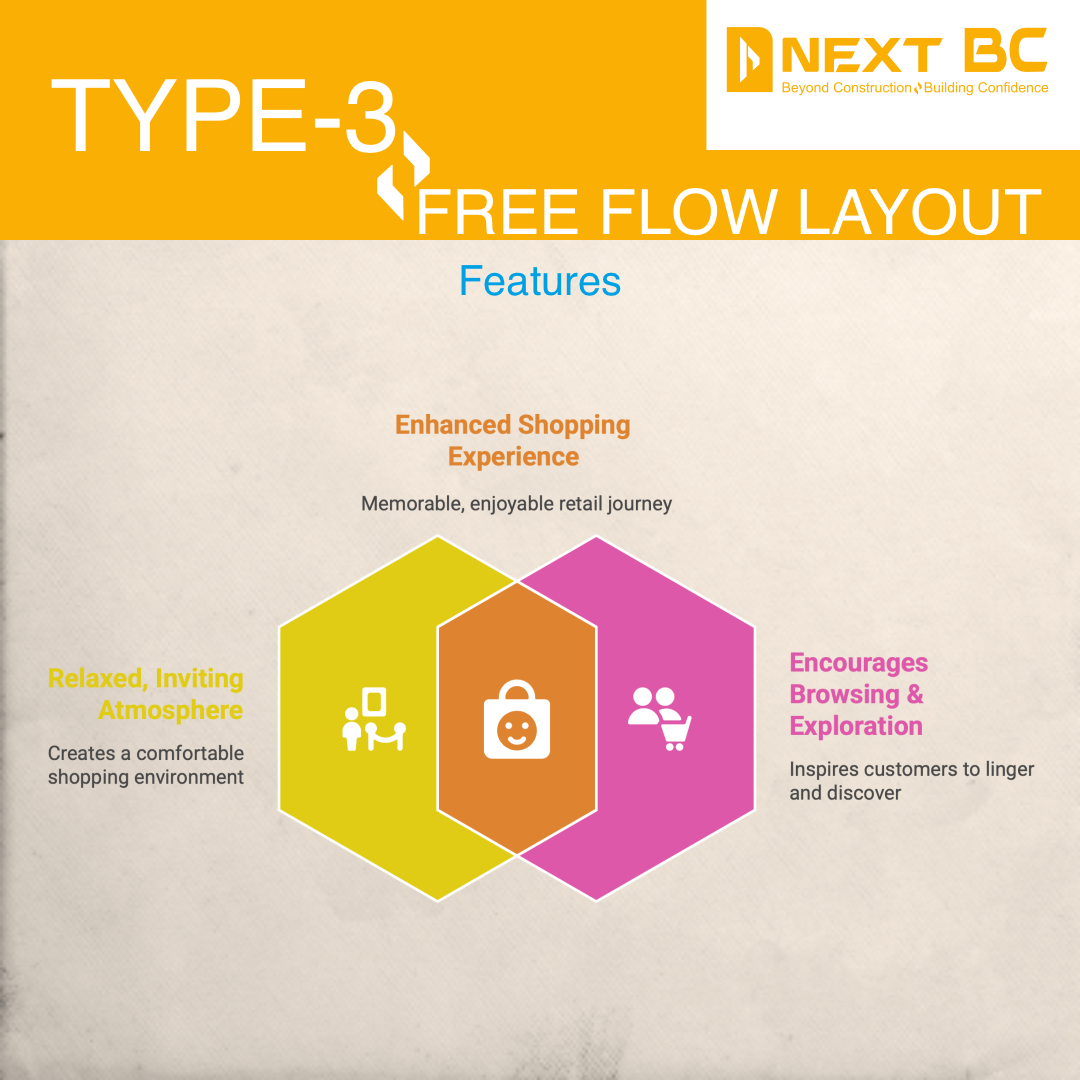
- Customers feel at ease and like to look around.
Pros:
- ✔ A casual and comfortable place to shop
- ✔ Encourages customers to look around more
- ✔ Great for telling stories and giving customers a brand experience
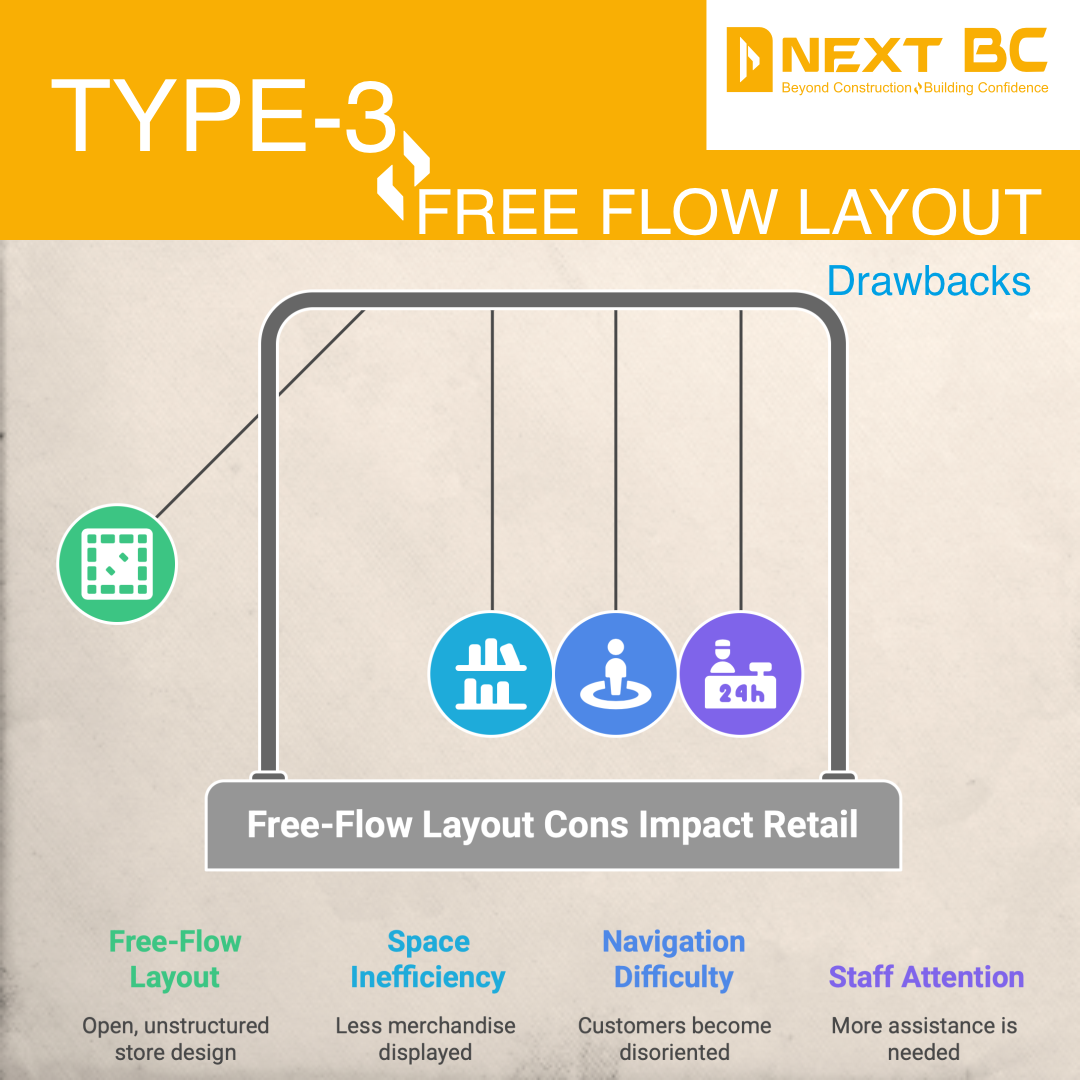
Cons:
- ✘ Compared to a grid layout, it doesn't use as much space. Customers might not know where to go if the design isn't done right.
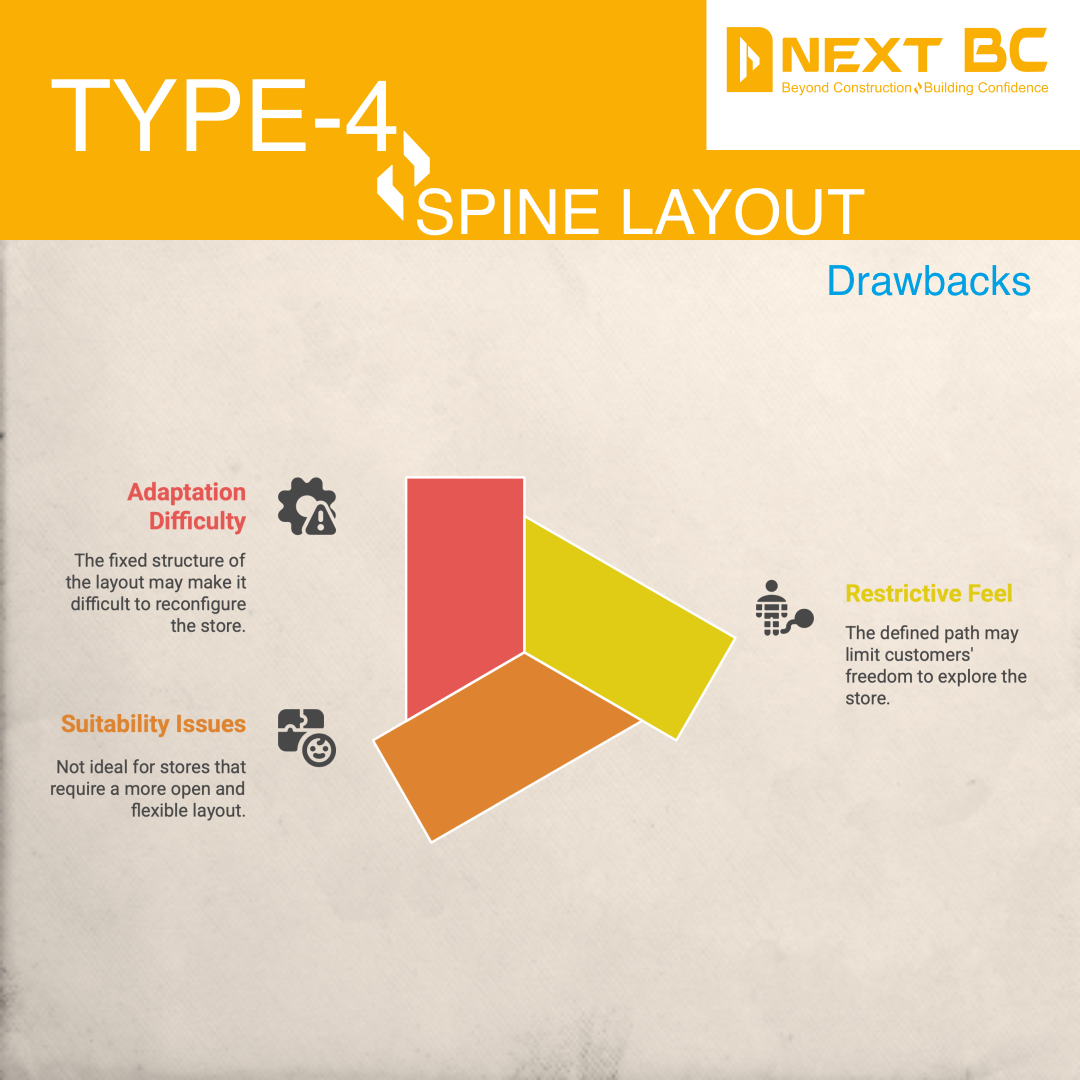
4. Spine Layout—Strong Direction & Clear Zoning
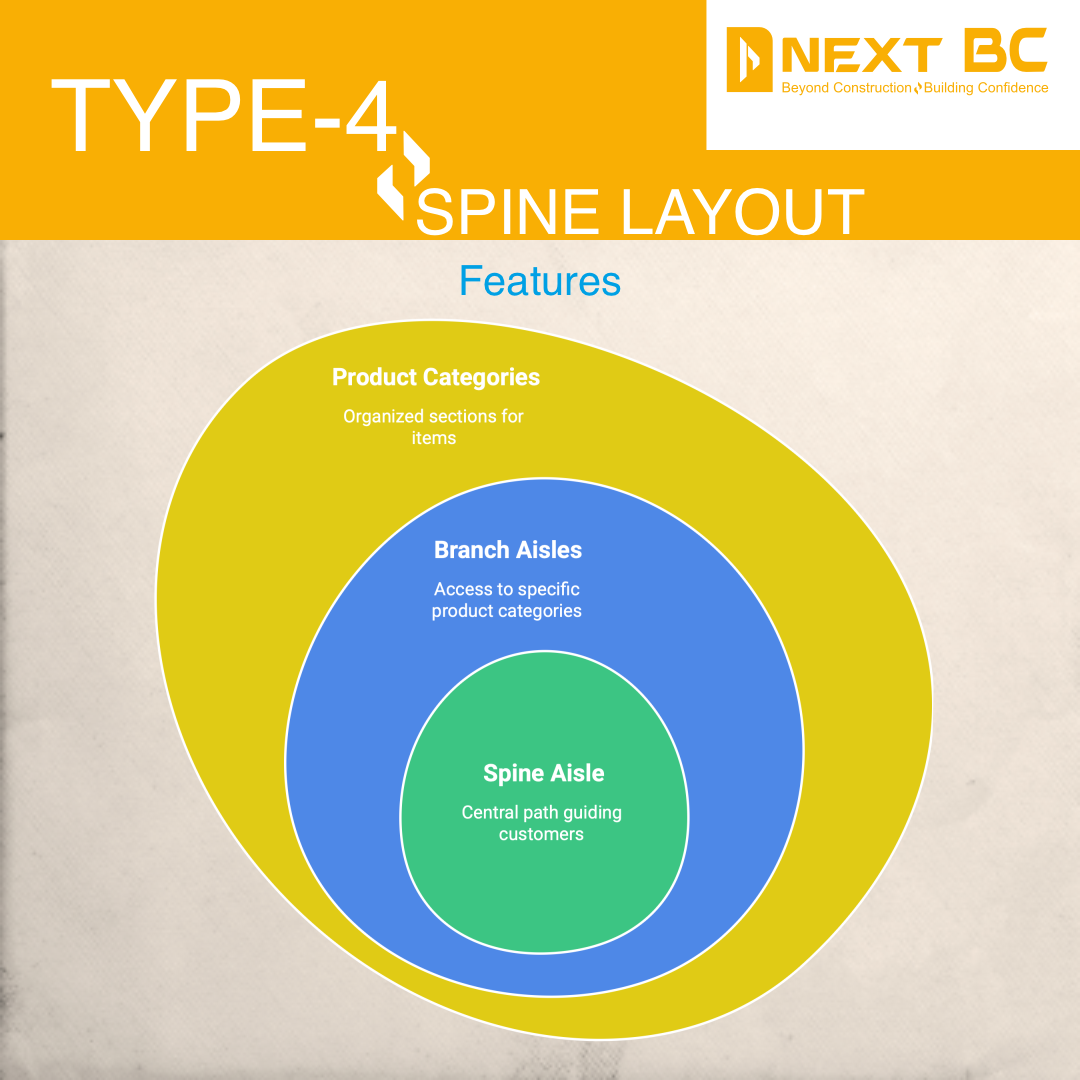
The Spine Layout has one main aisle running through the centre of the store. Smaller aisles branch out from this spine, helping shoppers move in a guided way without feeling forced.
You will find this layout in medium-sized retail stores, electronics shops, lifestyle stores, and even some modern liquor stores.
Why it works
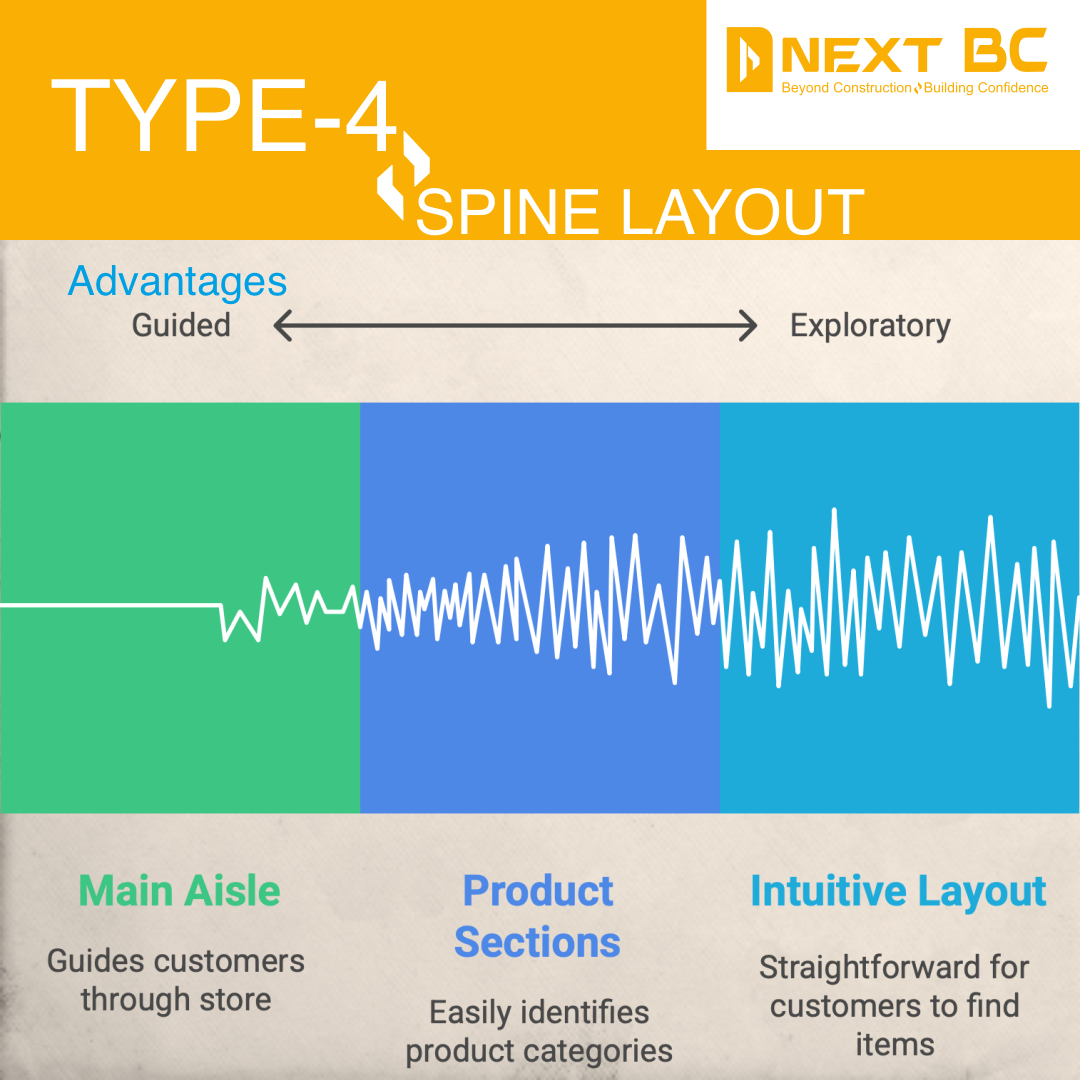
- Customers get a clear direction from entry to billing.
- Product categories are easy to zone on each side
- Works well in medium to large rectangular stores
Pros:
- ✔ Good traffic control
- ✔ Helps create strong product categories
- ✔ Works effectively with promotional displays located along the spine aisle.
Cons:
- ✘ The central aisle may feel crowded during peak hours.
- ✘ Not the best choice for stores that are very small or have odd shapes.
Four Different Store Layouts That Affect How Customers Feel
A store's layout affects how customers move, how long they stay, and how much they buy. A smart layout makes customers more comfortable and boosts sales without taking up more space.
These are the four layouts that stores use the most:
1. Layout of the grid
There are two parallel aisles, each with products on both sides.
- ✔ Best use of space
- ✘ Fast navigation
When you browse,
it seems to repeat itself less.
Found in grocery stores and drugstores.
2. The design of The Loop (Racetrack)
Customers can find their way around the store by following the Loop (Racetrack) layout.
- ✔ Products are easy to see
- ✔ People want to look around
- ✘ Many department and furniture stores use this layout, which can make you feel limited.
3. A layout that flows easily
The layout allows for open, creative displays without the need for strict aisles.
- ✔ Comfortable and high-end feel
- ✔ Great for telling stories and creative merchandising
- ✘ Less efficient use of space
It is used in lifestyle and boutique stores.
4. Layout of the spine
There is one main aisle with smaller ones that branch off of it.
- ✔ Good traffic control
- ✔ Clear zoning
- ✘ The spine can get busy
You can often find this layout in electronics stores and modern retail stores.
Final Thought:
There is no "best layout."
The right choice depends on how big your store is, what you sell, and how your customers act. A well-planned layout can change how you shop and directly increase sales.
Next, BC helps businesses plan store layouts that are useful, effective, and easy for customers to use.
We offer design / turnkey execution with lighting, MEP and visual merchandising integration for your space. Visit www.nextbc.in to learn more . . .
Thanks
Our Related News

Choosing Aesthetics Over Functionality: A Design Dilemma for Homeowners
When designing your dream home, it’s tempting to prioritize beautiful aesthetics—sleek countertops, statement lighting...

Ignoring Natural Lighting: A Common Oversight in Home Design
When designing a home, every decision—from color palettes to materials—contributes to the space's...
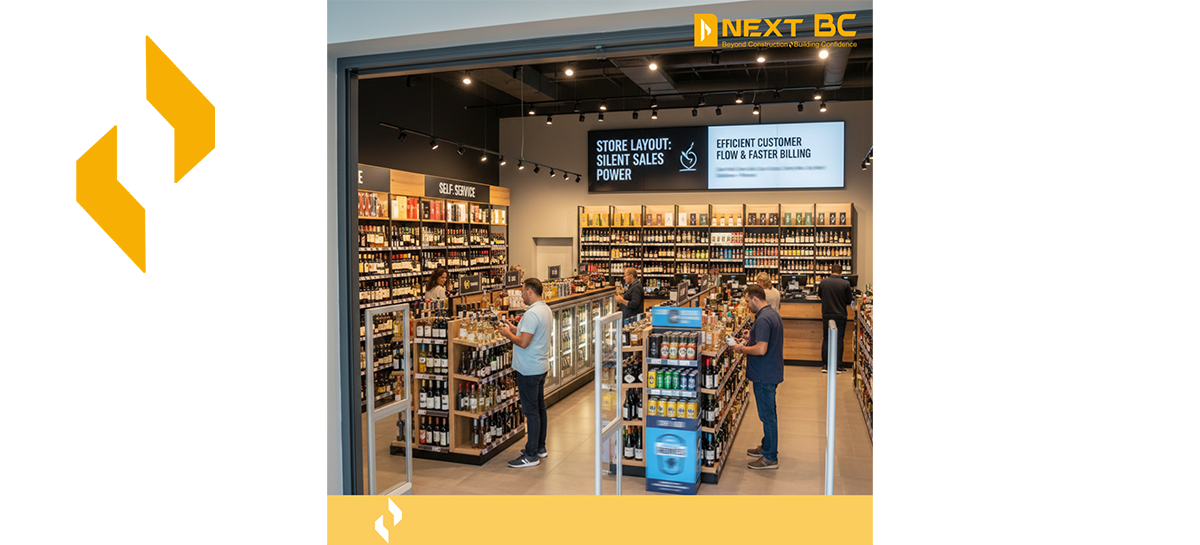
Why the Liquor Store Layout Impacts Customer Flow & Billing Speed
See how smarter aisle planning and checkout zoning reduce queues while lifting add-on sales.
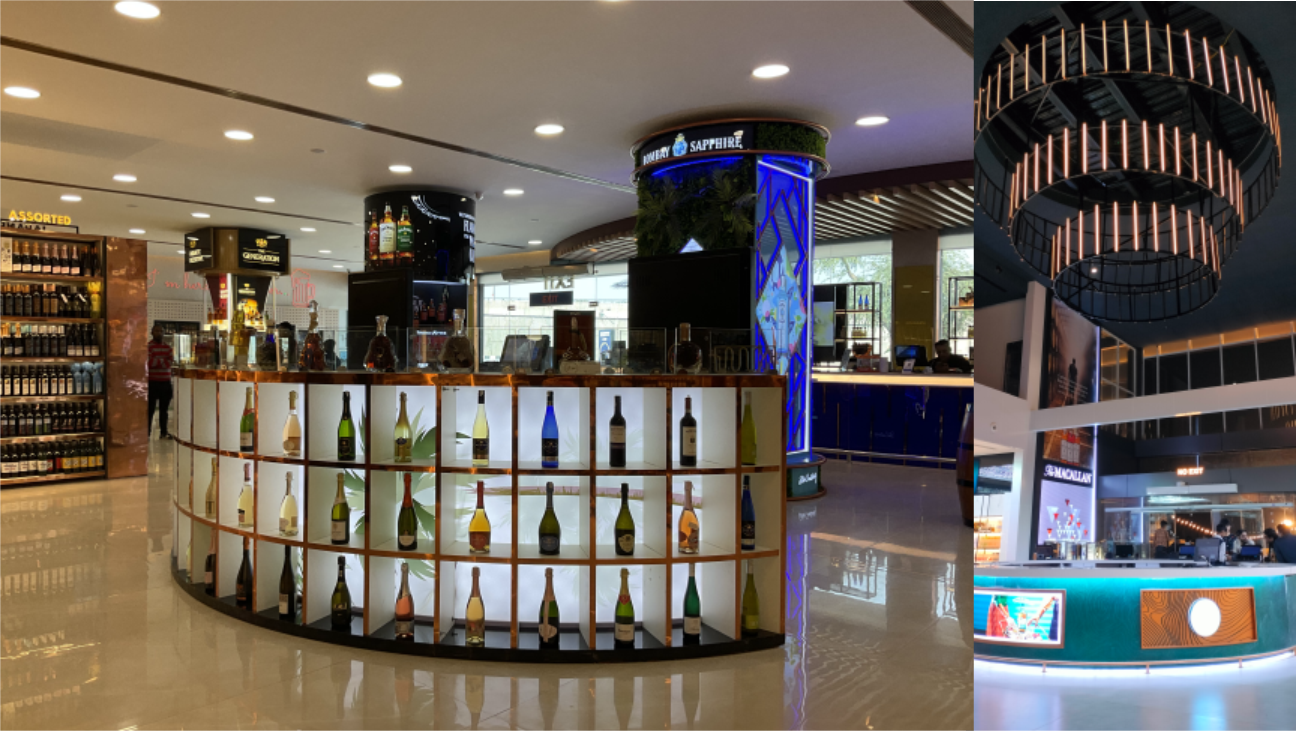
How a Well-Designed Interior Increases Liquor Store Sales
Layout, adjacencies and lighting tweaks that raise basket size in specialty retail.