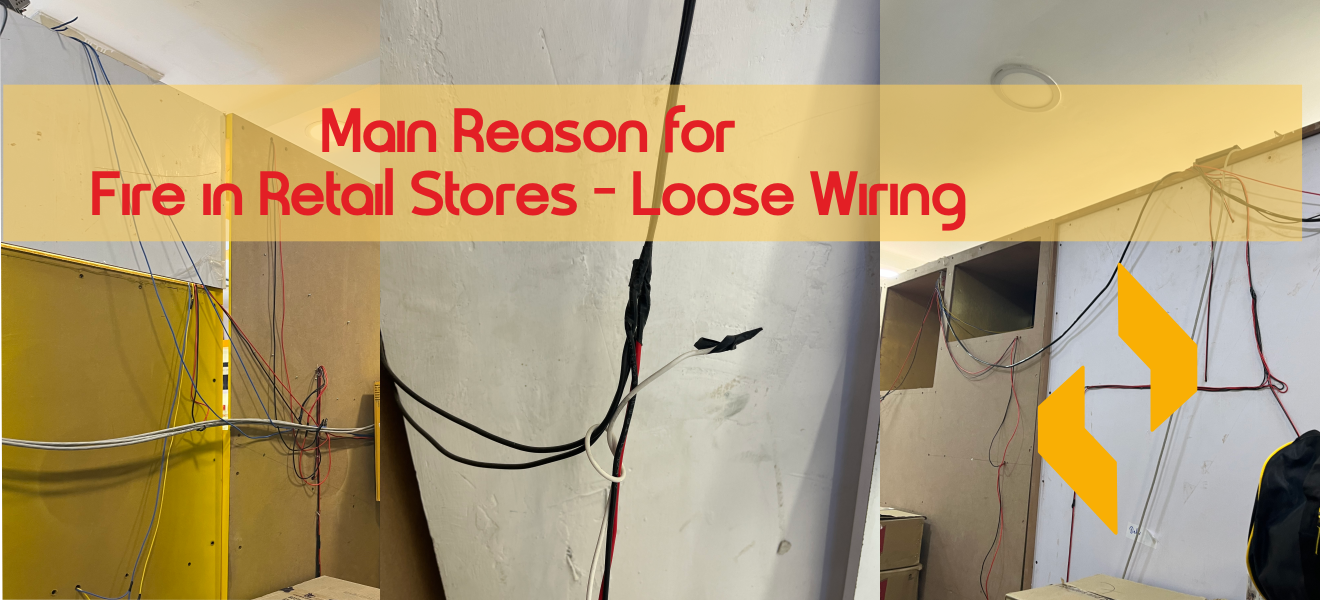
Fire accidents in retail stores are increasing every year. Most of the time, the answer is short circuit. But very few people understand why a short circuit actually happens.
Many shop owners believe:
“Electrical fires can happen anytime; we can’t avoid them". This is not true
In reality, most electrical fires are avoidable if wiring is planned and executed correctly.
Why Short Circuits Happen in Shops & Commercial Spaces
1. Loose Wires & Temporary Electrical Extensions
This is the most common mistake seen in retail stores.
When a new electrical point is required, many people
- Take supply from a nearby socket or switch
- Do a temporary extension
- Do not calculate load or amp requirements
They ignore:
- Total load on that point
- Running hours of equipment
- Heat generated over time
Loose connections slowly create heat and sparks, which finally lead to short circuits and fire.
2. Cutting Existing Wires & Adding Joints
Instead of pulling a fresh wire, many electricians:
- Cut the existing wire
- Add a joint to extend the length.
- Cover it with tape or connector
This is very dangerous.
Even in new buildings, due to layout changes, wire joints are added inside ceilings or walls.
Over time:
- Joints loosen
- Resistance increases
- Heat builds at the joint
Correct practice:
Whenever a new point is needed, a wire must be taken directly from the source (MCB / DB / switch) to the load point.
3. Bad planning and wrong electrical parts
Bad planning is a big reason why electrical fires happen.
Common mistakes include:
- Wrong wire thickness (gauge)
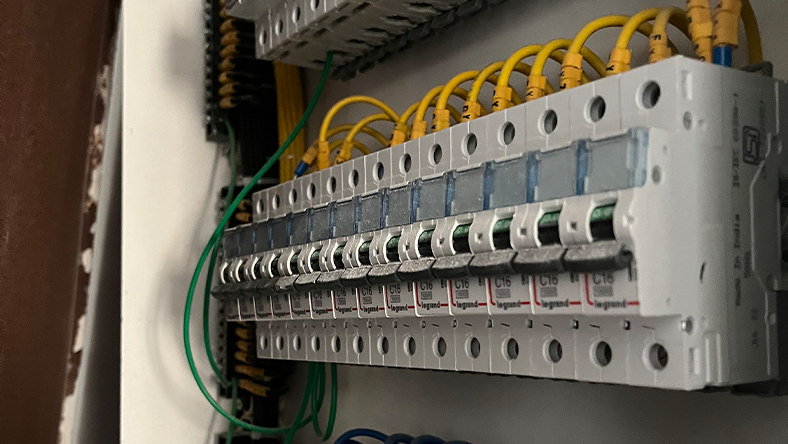
- Incorrect MCB rating
- Low-amp switches used for heavy equipment
- Poor phase load distribution
Missing safety devices like the following:
- ELCB / RCCB
- MCCB for higher loads
And also increase fire risk
Other Important Reasons That Are Often Ignored
1. Overloading of Plug Points
Using one plug point for multiple heavy appliances like
- Freezer
- Microwave
- Coffee machine
- Display lighting
leads to continuous overheating.
2. Electrical materials that aren't very good
Wires, switches and sockets that are cheap:
- Get hot faster
- Have bad insulation
- Fail quickly
Always buy electrical products that have the ISI mark
3. Hidden Joints Above Ceiling or Inside Panels
Hidden joints are dangerous because
- Heat cannot escape
- Problems go unnoticed
- Fire spreads very fast.
4. No Periodic Electrical Inspection
Most retail stores never check wiring after installation.
Over time, load increases and insulation weakens, but wiring is never upgraded.
Conclusion
Electrical fires are not sudden accidents.
- Loose wiring
- Improper joints
- Overloading
- Wrong planning
- Poor-quality materials
With correct wiring practices and regular inspection, up to 90% of retail store electrical fires can be prevented.
We offer design / turnkey execution with lighting, MEP and visual merchandising integration for your space. Visit www.nextbc.in to learn more . . .
Thanks

Frequently Asked
Questions
Yes. When wires aren't connected, they can spark and get hot, which can start a fire.
Joints should be avoided. If unavoidable, they must be done properly inside junction boxes.
Because joints make things more resistant and hot, which can start a fire.
Yes, if wiring is overloaded or poorly planned.
It's important to have the right MCB, RCCB/ELCB and load distribution.
At least once every year or whenever the load is increased.
No. Cheap materials fail quickly and increase fire risk.
Our Related News

Choosing Aesthetics Over Functionality: A Design Dilemma for Homeowners
When designing your dream home, it’s tempting to prioritize beautiful aesthetics—sleek countertops, statement lighting...

Ignoring Natural Lighting: A Common Oversight in Home Design
When designing a home, every decision—from color palettes to materials—contributes to the space's...
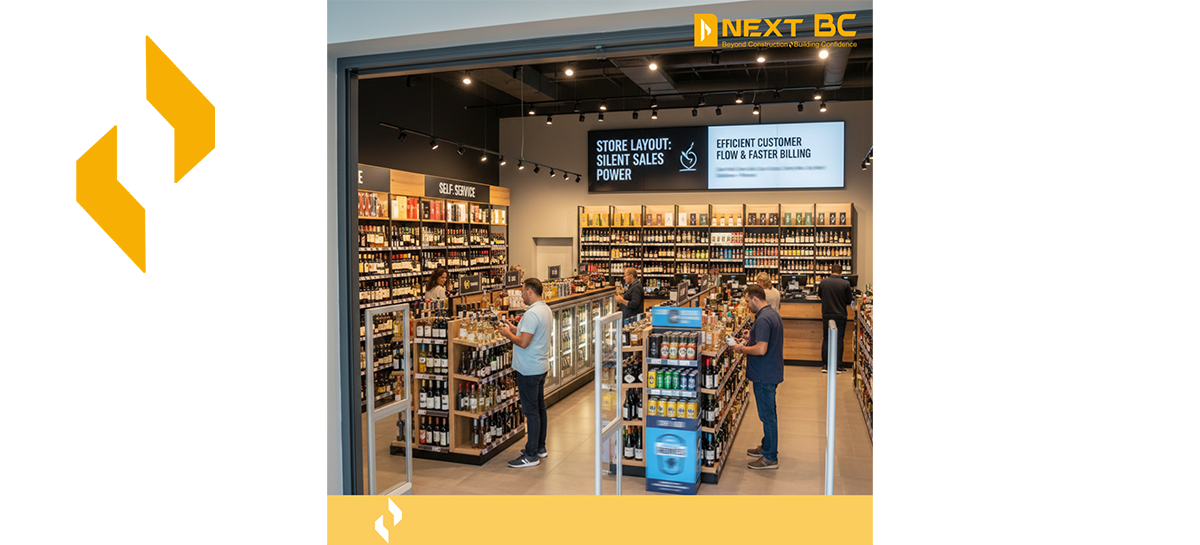
Why the Liquor Store Layout Impacts Customer Flow & Billing Speed
See how smarter aisle planning and checkout zoning reduce queues while lifting add-on sales.
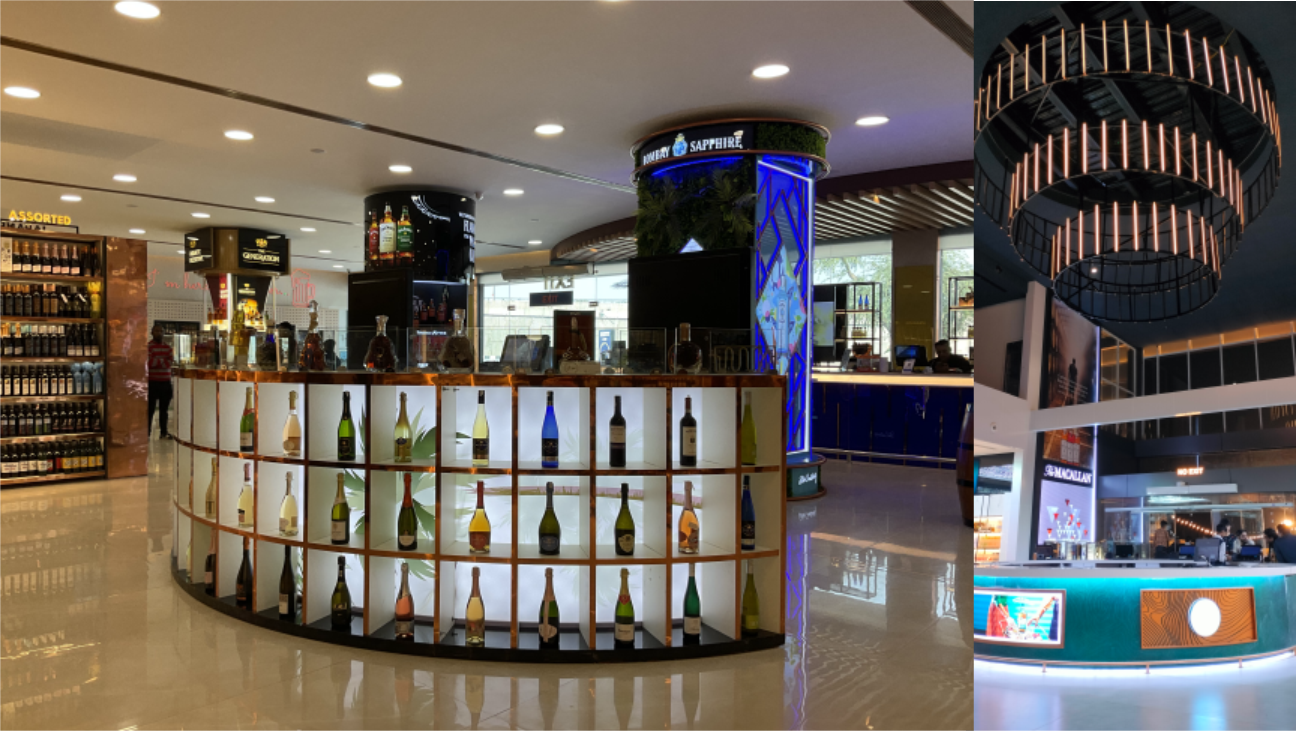
How a Well-Designed Interior Increases Liquor Store Sales
Layout, adjacencies and lighting tweaks that raise basket size in specialty retail.